
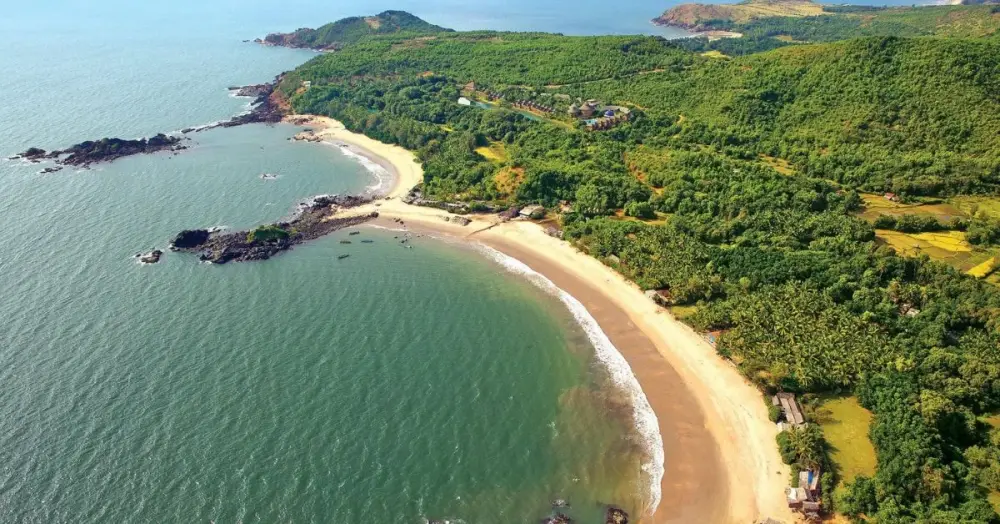
Walk the coast
Gokarna beach trek: Kudle, Om, Half Moon and Paradise
Five beaches strung along one headland, linked by a cliff path rather than a road. It is the best half-day walk on the Karnataka coast — here is exactly how it goes.
The Gokarna beach trek is the thing people remember from this coast long after they have forgotten the bus ride. Five beaches — Gokarna main beach, Kudle, Om, Half Moon and Paradise — sit in a line along one headland south of Gokarna town, and the only continuous way between them is a footpath over the cliffs. No road reaches the last two at all.
Walking the full chain is commonly described as 6 to 7 km of trail, and most people take three to four hours one way with stops for swimming and chai. It is not a hard trek. It is, however, a trek on exposed rock above the sea, and the difference between a great day and a bad one comes down to what time you start and what is on your feet.
The beaches in order
1. Gokarna main beach
Wide, long, flat and used by the town rather than by tourists. Fishing boats, temple visitors performing rituals at the water's edge, cows. It is not a swimming beach and it is not where the trek is interesting, but it is the usual starting point if you want to walk the whole thing. Most people instead start at Kudle and skip this stretch.
2. Kudle beach
The first of the proper trek beaches, reached by a short climb over the headland from town or by a direct road and footpath from above. Kudle is a broad crescent with a line of shacks and guesthouses at the back and the best swimming water of the accessible beaches. It is also the busiest in season — if you want Kudle to yourself, be on it before 8 am.
3. Om beach
The famous one, named for the double-crescent shape that reads as the Om symbol from the cliff above. Om has road access, which means it has the most development: shacks, water sports in season, parking. It is the natural midpoint of the trek and the sensible place to eat. The viewpoint on the climb between Kudle and Om is the single best photograph on the walk.
4. Half Moon beach
Smaller, quieter, no road. Half Moon is where the trek starts to feel like a trek — the path from Om climbs over a wooded headland and drops down the far side. There are a few basic shacks in season. Water here is usually calm and good for swimming, though there are no lifeguards anywhere on this coast.
5. Paradise beach
The last cove, and the one with the most confused reputation. Paradise is open and reachable, on foot from Half Moon or by boat. What has been stopped is the informal economy that used to exist there: the overnight camping, the long-stay shacks, the drug scene that grew around them. Those have been cleared and the area is policed periodically.
What that means for you is practical, not legal. There is no road, no electricity, no reliable food, no water and no toilets at Paradise. Treat it as a day visit, carry your own water, and do not plan to sleep there. The approach from Half Moon is over boulders and takes roughly twenty-five to forty-five minutes depending on the source you read and how fast you scramble.
Published walking times between these beaches differ noticeably between sources — one guide gives Om to Half Moon as 30–45 minutes, another as 40–45, and the segment distances vary too. Treat any single figure as approximate. The overall shape — three to four hours for the lot, one way — is consistent everywhere.
Which direction to walk
You have three sensible plans.
Kudle to Paradise, walk out and boat back
The most popular. Start early at Kudle, walk north to south through Om and Half Moon to Paradise, swim, then take a boat back to Om or Kudle in the afternoon. You get the whole trail without doing it twice, and you finish on the water.
Paradise to Kudle, boat out and walk back
Better in one specific case: if you want Paradise with nobody on it. The boats run from mid-morning, so a boat out at opening gets you there before the day crowd, and you then walk back against the flow with the sun behind you.
The partial: Kudle to Om and back
About an hour each way, no scrambling, and it includes the best viewpoint. If you have small children, limited time, or any doubt about footing, do this and stop. The Half Moon to Paradise section is the part that is genuinely rocky.
The boat option
Shared and private boats run between Om, Half Moon and Paradise through daylight hours in the dry season, generally from around eight or nine in the morning until the late afternoon. They are the standard way back and they save you an hour and a half of climbing on tired legs.
Things to know:
- Rates are negotiated, not fixed. Quoted figures online range widely and rise sharply in peak season and for private hire. Agree the price before you get in the boat.
- Cash only. There is no card machine on a wooden boat.
- Shared boats wait to fill. If you are in a hurry you are paying for the whole boat.
- They stop in rough seas and they stop in the monsoon entirely. If the water is up, your only way back is the way you came — factor that into your start time.
When to do the Gokarna beach trek
October to February is the window. The trail is dry, the rock has grip, the sea is calm enough for boats, and the heat is manageable. November through January is as good as this coast gets.
March to May is doable but you need to be off the exposed sections by about ten in the morning. There is almost no shade between Om and Half Moon and the laterite radiates heat.
June to September is a no. The monsoon makes the rock slick, the cliff sections dangerous, and the sea unswimmable; the boats do not run; and leeches are widely reported on the forested stretches between July and September. The trek is simply not advisable in those months. There is still plenty to do — see best time to visit Gokarna and Kumta and things to do besides the beaches — but this is not it.
What to carry
- Shoes with grip. Trail shoes or trainers. Not flip-flops, not new sandals. This is the single most common mistake.
- More water than you think. Two litres per person. Shacks exist at Kudle, Om and sometimes Half Moon; between them, nothing.
- Cash. For boats, shacks and the odd entry charge. Signal is patchy and UPI is unreliable on the beaches.
- Sun cover. Hat, sunglasses, sunscreen. The exposed headlands are brutal from mid-morning.
- A dry bag or a zip-lock for your phone. Boat landings are wet — you step off into the surf, not onto a jetty.
- A head torch if there is any chance you are finishing late.
Safety, honestly
Nothing about this walk is extreme, but a few things on this coast are worth stating plainly:
- There are no lifeguards. On any of these beaches. Rip currents are real, particularly at the ends of coves and on the shoulder months either side of the monsoon.
- Do not go past knee depth at Paradise even on a calm day. It is the most exposed of the coves and the furthest from help.
- Finish the forested Om–Belekan side before late afternoon. Local advice is consistent about not being on those sections after about 4 pm.
- Tell someone your plan if you are walking alone, and expect to lose phone signal in the dips between headlands.
- Leeches, July to September. Long socks and salt if you go in anyway.
How to reach the trailhead
Kudle and Om both have road access from Gokarna town — a ten to fifteen minute auto or scooter ride, with a short walk down at the end. If you are driving, park at Om; there is no parking at Kudle beach level.
Coming from further afield, see how to reach Kumta and Gokarna from Bangalore for buses, trains and both road routes. If you are staying on the Kumta side, as we are, Gokarna is a 26 km drive north on NH66 — about forty-five minutes, which makes a pre-dawn start on the trek entirely reasonable.
Making a trip of it
The beach trek fills one morning. It pairs naturally with:
- Mirjan Fort and the Kumta beaches, on the drive between Gokarna and Kumta
- Honnavar backwater boating, which is best at sunrise and so works on a different day
- Murudeshwar, 35 km south of us, for an afternoon
- Yana, if you have a full spare day and a car
For a two-day version of all this built around an overnight journey from Bangalore, see our Gokarna weekend getaway itinerary.
Frequently asked questions
How long is the Gokarna beach trek?
Walking the full chain from Gokarna town through Kudle, Om and Half Moon to Paradise Beach is commonly described as 6-7 km of trail in total, and most people take three to four hours one way including stops. Published segment timings vary between sources, so treat any single number as approximate.
Is Paradise Beach in Gokarna closed?
The beach itself is open and can be reached on foot or by boat. What has been stopped is overnight camping and the informal shacks that used to operate there, which have been cleared and are periodically policed. There is no road access, no electricity and no reliable food or water, so treat it as a day visit and carry what you need.
Is the Gokarna beach trek difficult?
It is rated easy to moderate. The path is well walked and does not gain much height, but there are rocky and boulder sections, especially on the Half Moon to Paradise stretch, and some stretches run along low cliffs with no railing. Normal shoes with grip are enough; flip-flops are not.
Can I take a boat instead of walking?
Yes. Shared and private boats run between Om, Half Moon and Paradise during daylight hours in the dry season. Rates are negotiated locally, vary a lot with season and demand, and are usually cash only. Boats stop running in the monsoon and in rough seas.
What is the best time of year for the beach trek?
October to February. The trail is dry, the sea is calm enough for boats, and daytime temperatures are manageable. During the June-September monsoon the rock becomes slippery, leeches appear on the forested sections, and the trek is not advisable.