
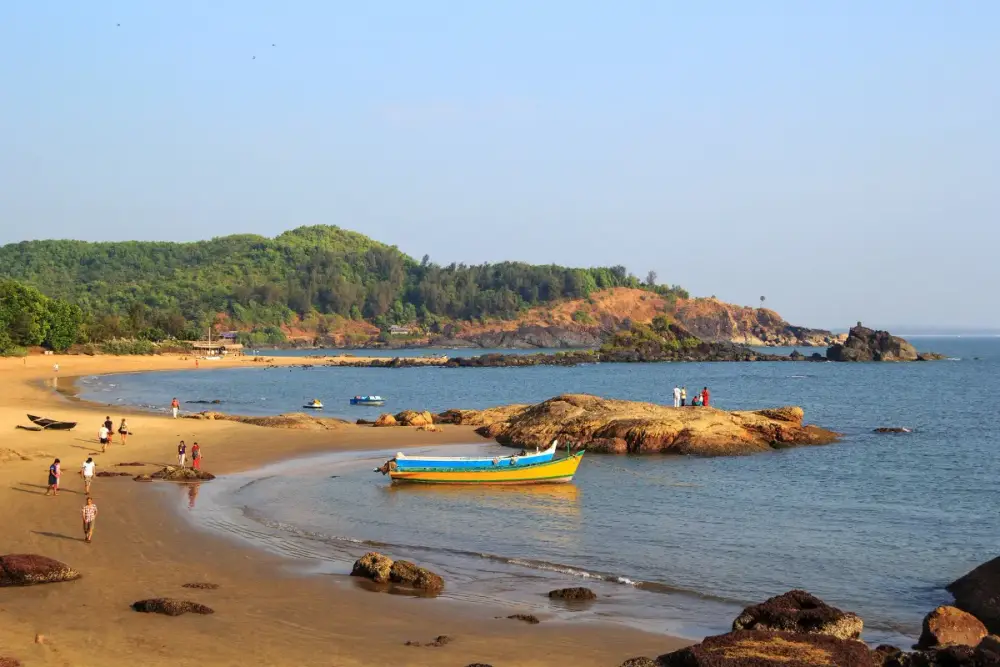
On the water
Honnavar boating and the Sharavathi backwaters
Twenty kilometres south of Kumta the Sharavathi river spreads into a maze of mangrove channels and islands. It is the best half-day on water anywhere on this coast, and almost nobody outside Karnataka knows about it.
The Sharavathi river comes off the Western Ghats at Jog Falls, runs west, and then — just before it reaches the Arabian Sea at Honnavar — spreads out into a wide estuary of mangrove channels, sandbars and small islands. Boating through it is the best few hours on water anywhere on the Karnataka coast, and almost nobody outside the state knows it exists.
Honnavar is a short drive south of Kumta on NH66; road distance figures cluster around 15 to 20 km, so allow about half an hour. That makes a sunrise boat trip genuinely practical from the Kumta coast — out before six, back for a late breakfast.
What the backwater boat trip actually covers
Trips are sold by duration rather than by itinerary, and the stops depend on water level and on how long you book. A typical run includes some combination of:
- The mangrove channels. The heart of it. Narrow water lanes between dense mangrove, where the boatman cuts the engine and you drift. Kingfishers, egrets, herons, the occasional otter. This is the bit people remember.
- Lotus point. A shallow backwater that carpets over with lotus in the right season.
- The "Kerala spot". Local name for a stretch of palm-lined channel that genuinely does look like Alleppey, and gets photographed accordingly.
- Madhuvana. Water-level dependent, so not on every trip.
- Nathgeri hanging bridge. Usually only included on the longest boat packages.
Boats are small — typically seven passengers as standard with capacity up to about fourteen — so this is a quiet, low, close-to-the-water experience, not a cruise.
On prices
We are not going to quote a rate. The figures circulating online do not agree with each other: one operator publishes a tiered price per boat rising with duration, while aggregator pages quote a much lower per-person figure. There is no single official operator here — it is a fragmented market of private boat owners, several with their own websites, alongside a forest department facility. Expect to pay per boat rather than per head for a private trip, expect the price to rise with duration, and confirm the number with the operator on the day you go. Carry cash.
When boats run
Generally through daylight hours in the dry season, with the first trips going out around dawn. Boating does not operate during the monsoon, when the Sharavathi is in spate and the estuary is dangerous. Sunrise and the last two hours before sunset are both much better than the middle of the day — better light, more bird activity, less heat. See best time to visit Gokarna and Kumta for the seasonal picture.
The Mavinakurve mangrove walkway
If you would rather not get in a boat, there is a mangrove boardwalk at Mavinakurve run by the Honnavar Forest Division. It is a raised walkway out through the mangrove, which lets you see the root systems and the mudflat life at low tide at your own pace. It has become popular enough that it reportedly sees several hundred visitors a day in season, so go early if you want it quiet.
The boardwalk and the boat trip are complementary rather than alternatives: the walkway shows you how a mangrove works, the boat shows you how big the system is.
Basavaraj Durga island
The most interesting destination in the estuary, and the one most visitors never hear about. Basavaraj Durga is a 19-hectare island in the Sharavathi, around 45 to 50 metres high, with freshwater wells on it.
What is on it:
- A Hindu temple built in the 16th or 17th century.
- A laterite-block fort built by Vijayanagara rulers in 1590, later taken by the Keladi ruler Shivappa Nayaka, who renamed it after prince Basavaraj.
- Eight ruined guns still mounted on the walls.
It sits about 4 km from Honnavar, 3 km from Sharavathi bay, 1 km from Mavinakurve village and 700 m from Taribagilu. There is no bridge: you reach it by boat, trawler or canoe — roughly 30 to 45 minutes upstream from Honnavar, or five to ten minutes from Taribagilu if you drive round to that side first. Fishermen visit the island temple on Makara Sankranti, 14 January, to worship the Nagadevate for protection at sea.
If you want this specifically, say so when you book your boat. Not every operator runs out to it, and it is not a stop on a standard one-hour mangrove trip.
Kasarkod-Tonka and the olive ridley turtles
Kasarkod-Tonka beach at Honnavar is a recognised olive ridley turtle nesting site. Nesting was first recorded here in 1984, and the site now sees several thousand eggs laid annually. Google has recognised a 1.4 km stretch adjoining it as "Olive Ridley Turtle Road", and the beach is treated as a conservation area.
Nesting season runs broadly from late November or December through to February or March, with the peak across December to February; turtles typically reach these shores in the first week of December. January is the month to aim at.
How to behave there, which matters more than when you go:
- Visit in daylight. Hatchlings and nesting females orient by moonlight on water; torches and phone lights disorient them.
- Keep well back from marked nests and do not dig, stand on or photograph with flash near them.
- Do not drive on the beach. Compacted sand destroys nests below the surface.
- Do not expect a guaranteed sighting. This is a wild nesting beach, not an attraction with show times.
Worth knowing: the nesting grounds here are the subject of an active, unresolved conflict with a proposed port development, which has been covered extensively in the Indian press. The site's future is genuinely uncertain.
Apsarakonda falls
About 8 km from Honnavar, Apsarakonda is a waterfall dropping into a pool with a park and a viewpoint over the sea above it, plus a temple complex. It is a short, easy walk rather than a trek, and it combines neatly with a morning on the backwaters — boat at sunrise, falls by mid-morning. Flow is strongest at the end of the monsoon and through October to December; by March there is not much to see.
Putting a Honnavar day together
From the Kumta coast, the version that works best:
- 5.15 am. Leave Vannalli. It is dark and the highway is empty.
- 6 am. On the water at Honnavar for sunrise, two hours through the mangroves.
- 8.30 am. Breakfast in Honnavar town.
- 9.30 am. Apsarakonda falls and the sea viewpoint above it.
- 11.30 am. Either continue 20 minutes further south to Murudeshwar for the statue and the gopura lift, or turn back north.
- Afternoon. Back at Vannalli, out of the heat.
In January, swap Apsarakonda for a daylight walk at Kasarkod-Tonka.
Practical notes
- Book the boat the day before, especially for a sunrise slot. Turning up at 6 am hoping to find a boatman is optimistic.
- Cash. Assume no card and unreliable UPI.
- Sun protection even at dawn. There is no shade on a small boat and the water reflects.
- Binoculars if you have them. The birding here is the main event for a lot of visitors.
- Life jackets. Ask for them, and ask for one that fits a child if you have one with you.
- Honnavar has its own Konkan Railway station if you are coming by train rather than road. See how to reach Kumta and Gokarna.
How it compares to the rest of the coast
If you only have time for one thing beyond the beaches, the choice is usually between this and Yana. Yana is more dramatic and more of a drive. Honnavar is gentler, closer, better for children, far better for birds, and much better value for the time spent. If you have two spare mornings, do both; they are completely different landscapes an hour apart.
For everything else within reach, see places to visit in Kumta and things to do in Gokarna besides the beaches.
Frequently asked questions
How far is Honnavar from Kumta?
Road distance clusters around 15-20 km, roughly a 30 minute drive south on NH66. Honnavar also has its own Konkan Railway station.
How much does Honnavar backwater boating cost?
Operators publish different rate cards and the figures circulating online do not agree with each other, so we will not quote one. Expect to pay per boat rather than per head for a private trip, with price rising by duration, and confirm the rate with the operator on the day. There is no single official operator; it is a fragmented private market plus a forest department mangrove boardwalk.
What is the best time of day for the boat trip?
Sunrise and late afternoon, both for light and for bird activity. Operators generally run through daylight hours in the dry season. Boating stops during the monsoon when the river is in spate.
What is Basavaraj Durga island?
A 19 hectare island in the Sharavathi estuary with a 16th-17th century temple and a laterite fort built by Vijayanagara rulers in 1590, later taken by the Keladi ruler Shivappa Nayaka who named it after prince Basavaraj. Eight ruined guns still sit on the walls. It is about 4 km from Honnavar and is reached only by boat, typically 30-45 minutes upstream.
Where can I see olive ridley turtles near Honnavar?
Kasarkod-Tonka beach near Honnavar is a recognised olive ridley nesting site, with nesting recorded there since 1984 and a protected stretch of shoreline. Nesting runs broadly December to February. Visit in daylight, keep well back from marked nests, and do not use torches on the beach after dark.